
A concept should belong in its market
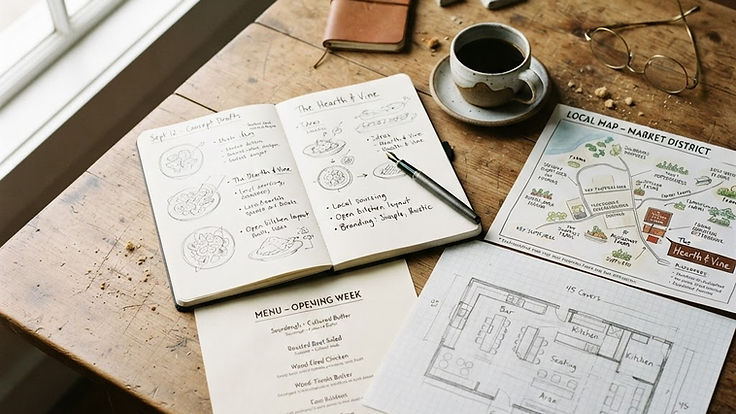
A restaurant idea becomes more useful when it answers specific questions: Who is the guest? What occasion brings them through the door? What will they spend? Why will they return? We help clients develop answers that connect their vision with the realities of a particular location.
Who this service helps
Owners and founders developing a new restaurant concept, refining an existing idea, or preparing to commit to a particular format and location. The work suits businesses at the stage where the idea can still be shaped before significant investment.
Problems or decisions we address
A concept needs a coherent identity that guides daily choices, and it needs to answer to a specific market.
- Which guests and occasions the business should serve, and how often those occasions arise
- A clear position: the intended guest, offer, service style and point of difference
- How the concept will be recognizable in the food, the welcome, the room and the digital presentation
What we examine
We consider how the proposed menu and service format affect preparation, equipment, purchasing, staffing and the use of space, and we organize the commercial assumptions behind the concept so they can be tested.
- Local context: demand, spending patterns, opening hours, capacity and recurring costs
- Whether a complex menu places demands on storage and training the original idea did not anticipate
- Different trading scenarios, so the owner can consider what happens if demand develops more slowly or costs change
How we work with the owner and team
We make assumptions explicit so the owner can distinguish evidence from enthusiasm. Decisions are discussed with the people responsible for delivering the concept, so the direction remains connected to the operation that must eventually run it.
Potential deliverables, subject to agreed scope
Depending on the agreed scope, the engagement can result in working tools that connect the idea to the people responsible for delivering it.
- Concept brief
- Target-guest profile
- Positioning statement
- Outline operating model
- A prioritized set of decisions for the next development stage
Subject to agreed scope.
How progress can be reviewed
We revisit the concept as the plan develops, comparing the original assumptions against new evidence from the market, the team and the operation. The purpose is to support informed choices about scale, positioning and resources before commitments become difficult to reverse.
Bring us the idea, the proposed market and the questions you have not yet resolved. We will help you examine how they fit together.
Discuss Your Restaurant Concept